San Carlos Hills vs Flats Homes: Find Your Ideal Fit
May 7, 2026
May 7, 2026
Choosing between the San Carlos hills and the flats is not just about price or square footage. It is about how you want your days to feel, how much convenience matters, and what kind of setting helps you feel at home. If you are weighing both areas, this guide will help you compare lifestyle, home characteristics, and practical tradeoffs so you can move forward with more clarity. Let’s dive in.
In San Carlos, “flats” is a practical local shorthand for the lower-elevation neighborhoods near downtown, Laurel Street, and the station area. “Hills” generally refers to the west-side hillside neighborhoods west of Alameda de las Pulgas. These are not official neighborhood labels, but they reflect how the city’s geography and development pattern are commonly understood.
The difference starts with the land itself. Downtown San Carlos follows a more traditional grid pattern and is centered around Laurel Street from Holly Street to Arroyo Street, with nearby civic and commercial uses. The western side of town shifts into hillside terrain, where streets and homes follow the contours of the land and some properties include bay views.
If you want to be closer to the everyday energy of San Carlos, the flats often make the strongest case. The city describes downtown as a walkable area with local-serving retail, grocery options, restaurants, and a pedestrian-focused environment. That makes it especially appealing if you value being able to get out the door and reach daily destinations without much planning.
The station area also adds to the appeal. San Carlos Station is part of the Caltrain system, and SamTrans lists connections including ECR, 260, 295, and 397. If your routine includes commuting or regional travel, being closer to the core can simplify day-to-day movement.
In many of the flatter, downtown-adjacent areas, the residential feel is more compact and connected. City descriptions point to older residential blocks, a grid-like street pattern, historic homes, and a mix of housing types. For many buyers, that can translate into more straightforward access, less topographic complexity, and outdoor space that may be easier to use and maintain.
The flats may be the right fit if you want:
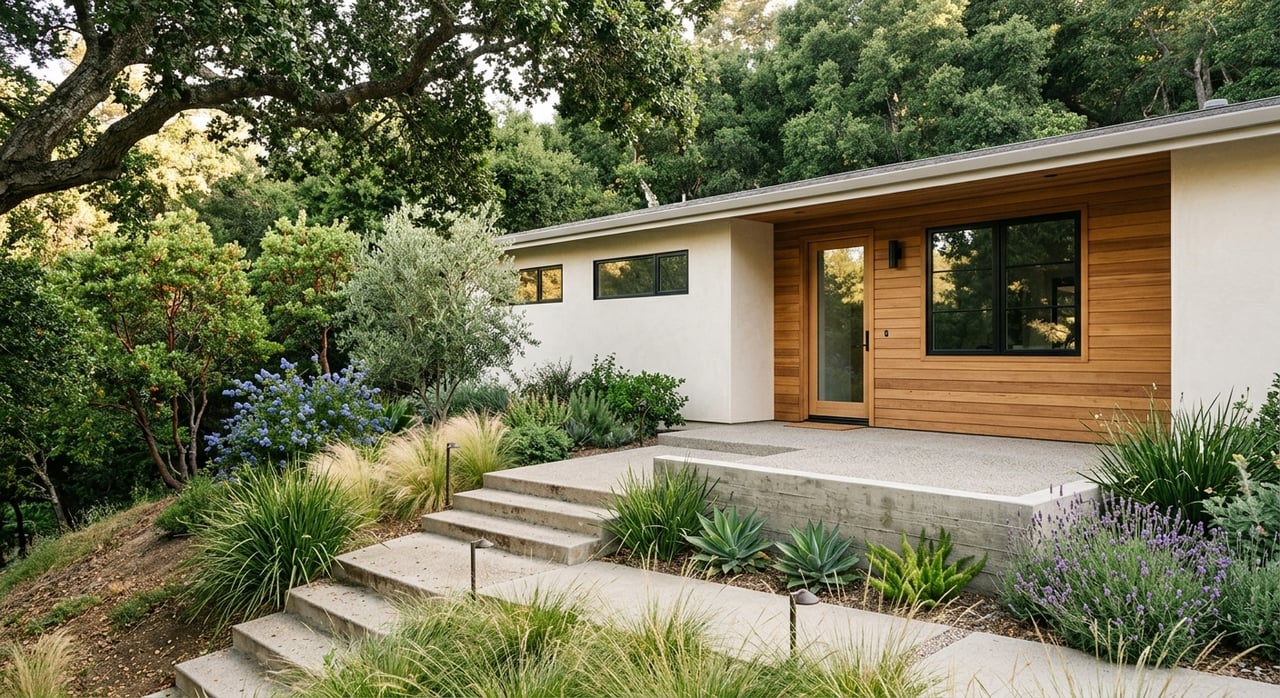
If you are drawn to space, elevation, and a stronger sense of retreat, the hills may feel like the better match. The city describes the western portions of San Carlos as hillside terrain, and in the far-western areas near Brittan and Crestview, some homes and condos have bay views. That elevated setting is a major reason many buyers focus their search here.
The home experience can be very different in the hills. Streets follow the contours of the land, and homes often step with the slope. Some hillside homes appear to be one story from the street even though they are actually multi-story.
That terrain can create a different kind of living experience. You may gain more visual drama, more separation from neighbors, and stronger connections to open space. At the same time, the land itself becomes a bigger part of your buying decision.
The hills may be the right fit if you want:
For buyers who want nearby dining and errands, the flats usually come out ahead. For buyers who want trails and open space, the hills have a compelling advantage. San Carlos rises from the Bay to the coastal mountains, and the city maintains 8.9 miles of recreational trails, including 3.7 miles of hillside trails.
The city also highlights Big Canyon and Eaton as more than 73 acres of open space with scenic hikes and bay views. If outdoor recreation is part of your weekly routine, that proximity can meaningfully shape how you use your neighborhood. It is not just about the home itself, but about what feels easy to do on a Tuesday evening or a Sunday morning.
One of the biggest differences between the hills and flats is how the lot affects daily life. In flatter areas, lot shapes and access often feel more predictable. In the hills, the terrain can create stepped yards, sloped driveways, stair access, and outdoor spaces that vary in how usable they feel.
That does not make one better than the other. It simply means you should look beyond the listing photos and ask how the property lives. A beautiful view may come with more stairs, while a home closer to downtown may offer easier access but less elevation and separation.
As you compare homes, keep these practical questions in mind:
If you are considering a hillside property, due diligence becomes especially important. San Mateo County notes that grading for roads, home construction, and landscaping can affect hillside stability. County grading regulations focus on reducing hazards such as slides, rockfalls, erosion, siltation, and flooding.
That does not mean hillside homes should be avoided. It means you should evaluate them carefully and understand the site-specific factors that come with sloped land. Drainage, retaining walls, and grading history are all worth close attention when you are comparing options.
For homes in the hills, buyers often want to understand:
A home can look perfect on paper and still feel wrong if it does not support your routine. That is why the hills-versus-flats decision often comes down to rhythm more than features. The best fit usually depends on how you live from Monday through Friday, not just what feels exciting at an open house.
If you want to walk to coffee, dinner, grocery stops, or the train, the flats may offer the smoother daily experience. If you are happiest coming home to a quieter, elevated setting with a stronger sense of retreat, the hills may deliver more of what you value. Both can be excellent choices, but they solve for different priorities.
If you feel torn, try ranking your top priorities instead of comparing homes one by one. Buyers who prioritize views, privacy, and a more dramatic setting often lean toward the hills. Buyers who prioritize shops, rail access, and a simpler day-to-day routine often feel more at home in the flats.
That kind of clarity can save you time and reduce second-guessing. Once you know what matters most, the right part of San Carlos usually becomes easier to spot.
San Carlos offers both convenience and character, but the right choice depends on what you want your home to support every day. If you want a thoughtful, local perspective as you compare the hills and flats, Vicki Ferrando can help you narrow the options and focus on the homes that truly fit your lifestyle.
Stay up to date on the latest real estate trends.
Vicki is consistently the main point of contact throughout the real estate transaction and maintains a streamlined avenue of communication with clients. She curates a highly respected network of resources for connecting clients with local specialists and service vendors. Contact her today!
GET IN TOUCH WITH VICKI TO LEARN MORE
VICKI FERRANDO | CA DRE# 01418802
160 MAIN ST LOS ALTOS CA 94022