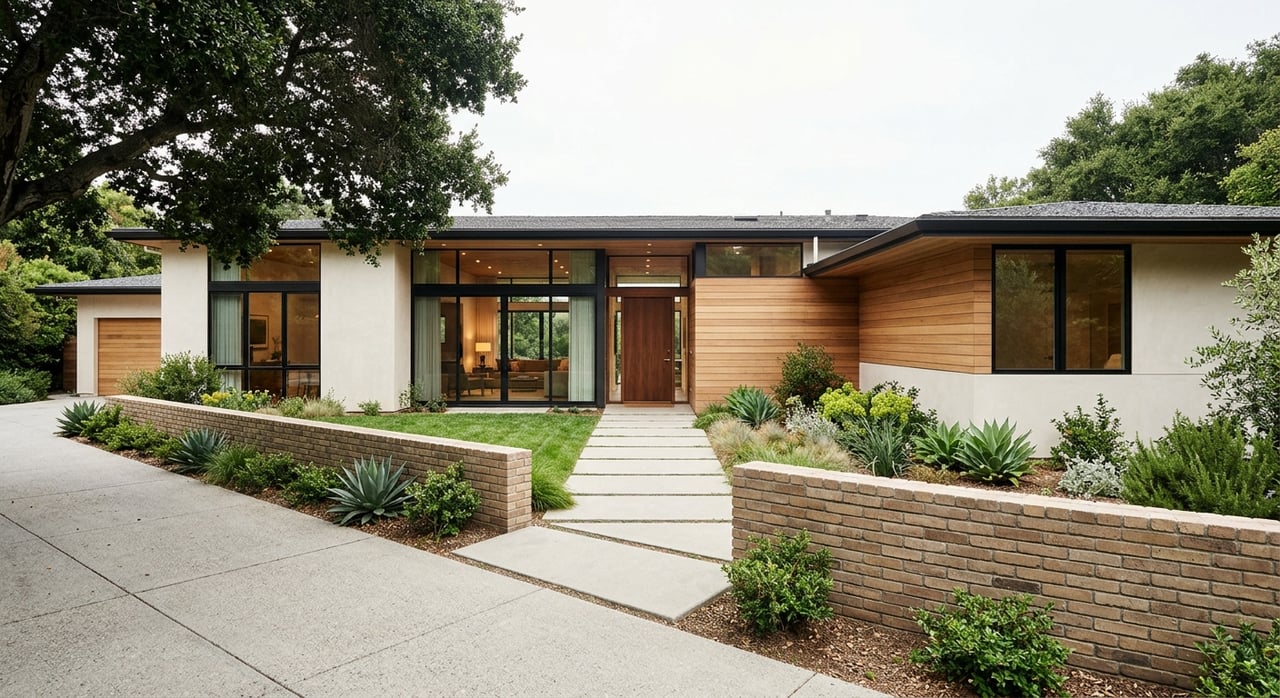
Menlo Park Micro Real Estate Markets and Pricing
May 21, 2026
May 21, 2026
If you look at Menlo Park and see one big market, you are likely missing the real story. A citywide median price can be useful, but it does not explain why one home draws intense competition while a similar home across town takes longer to sell. When you understand Menlo Park as a collection of micro-markets, you can price, shop, and negotiate with much more confidence. Let’s dive in.
Menlo Park remains a high-priced, competitive market overall, but the numbers show clear variation beneath the surface. Redfin’s March 2026 snapshot showed a median sale price of about $3.05 million, roughly 12 days on market, and about 4 offers per home on average. Realtor.com’s April 2026 snapshot showed a $2.998 million median listing price, 76 homes for sale, 22 median days on market, and a 108% sale-to-list ratio.
Those figures point to a seller-leaning environment, but they do not tell you how pricing or competition behaves in each part of the city. The City of Menlo Park’s neighborhood analysis looks at 16 neighborhoods specifically because conditions differ materially across the city. That is the key idea for both buyers and sellers: Menlo Park pricing works best at the neighborhood level, not just the city level.
A micro-market is the smaller slice of the market where buyers are really making comparisons. In Menlo Park, that often means looking at homes with a similar location, housing type, school-district context, transit access, and environmental conditions. Two homes with similar square footage can perform very differently if they sit in different micro-markets.
This matters because buyers do not just price a house by size or finish level. They also weigh commute convenience, access to daily errands, street patterns, neighborhood layout, and flood-hazard context. Sellers who understand those local tradeoffs can position a home more accurately from the start.
Central Menlo had a median listing price of $2.25 million in Realtor.com’s April 2026 snapshot, with 5 homes for sale and 36 days on market. The City notes that the area is close to El Camino Real, Ravenswood Avenue bus stops, Laurel Street transit, and the Menlo Park Caltrain station. It is also outside a flood hazard zone.
That combination helps explain why Central Menlo can attract steady demand. Buyers often respond to convenience and connectivity, even when pricing and market pace differ from nearby areas.
Allied Arts and Stanford Park showed a much higher median listing price of $3.924 million, with 7 homes for sale and 36 days on market. The City describes the area as a mix of detached single-family homes and two-story apartments, along with retail and commercial uses along El Camino Real. The neighborhood is not in a flood hazard area.
This is a strong example of how a premium corridor can stand apart from the citywide average. If you are selling here, broad Menlo Park comps may understate your market position. If you are buying here, you need to be prepared for a very different pricing tier.
Sharon Heights came in at a $2.34 million median listing price, with 20 homes for sale and 22 days on market. The City profile describes a mix of detached homes and medium-density apartments, one grocery store in the neighborhood, limited transit, and limited accessible sidewalks or bike lanes on most streets. It is outside flood hazard zones.
For buyers, this shows how competition is shaped by more than list price alone. For sellers, it is a reminder that the buyer pool may respond differently here than in a more transit-connected part of Menlo Park.
The Willows is a good example of why small sample sizes matter. One Realtor.com view showed a median listing price of $2.999 million, 8 homes for sale, and 15 days on market, while a neighborhood-specific page showed $2.974 million, 3 homes for sale, and 27 days on market.
Those numbers are not necessarily in conflict. They show how a small submarket can shift quickly depending on timing and inventory. The City also notes that most of The Willows is within a half-mile of one of three grocery stores, while flood-hazard exposure rises sharply west of Menalto Avenue.
West Menlo Park showed a $3.998 million median listing price, with 11 homes for sale and 33 days on market. The City profile describes the neighborhood as primarily detached single-family homes, with access that relies heavily on Santa Cruz Avenue and Valparaiso Avenue. The eastern border touches flood hazard area.
This is another area where citywide averages can miss the mark. A detached-home-dominant neighborhood with a higher price point often competes within its own premium lane.
Belle Haven had only 2 homes for sale and 6 rentals in Realtor.com’s snapshot, and no stable neighborhood median listing price was available. The City describes Belle Haven as mostly detached homes with some low-rise apartments, good bus access along Willow Road, and public amenities including a library, parks, a fire station, and a school. The neighborhood also faces constraints from US-101 and the Bayfront, and more than 60% of the area is in a flood hazard zone.
This is exactly the kind of submarket where broad averages can be misleading. With very limited inventory, a single listing can skew the picture quickly.
One of the biggest reasons Menlo Park micro-markets diverge is housing stock. Some neighborhoods are dominated by detached single-family homes, while others include apartments, retail, office uses, or public facilities. That changes who is shopping there and what those buyers are comparing.
For example, West Menlo and The Willows are dominated by detached homes, while Allied Arts, Stanford Park, and Sharon Heights have more mixed housing patterns. That difference can affect price per square foot, time on market, and how quickly homes absorb.
Transit and day-to-day convenience also create meaningful separation between micro-markets. Downtown Menlo Park has a pedestrian-oriented retail core, and the City notes that the civic center campus is a short walk to the Caltrain station and downtown retail district. Central Menlo benefits from that kind of connectivity.
Other areas function differently. Sharon Heights has limited transit, Belle Haven is funneled by US-101 and Willow Road, and West Menlo relies on nearby arterials. In practice, buyers are often pricing in convenience just as much as house features.
Menlo Park is served by multiple school systems, and district boundaries can influence how buyers narrow their search. City resources identify several school systems serving Menlo Park, including Las Lomitas Elementary School District, Menlo Park City School District, Ravenswood City School District, Redwood City School District, and Sequoia Union High School District. The Menlo Park City School District says it serves parts of Menlo Park, Atherton, and unincorporated San Mateo County, including Encinal, Laurel, Oak Knoll, and Hillview.
The main point is not to make a value judgment about one area over another. It is that district lines, school commute patterns, and school-adjacent locations can shape buyer behavior and competition in very specific ways.
Flood-hazard exposure is another major divider in Menlo Park. The City’s neighborhood analysis says more than 60% of Belle Haven is in a flood hazard area. It also notes that about 75% of The Willows west of Menalto Avenue and 15% east of Menalto Avenue are in flood hazard area, while West Menlo borders flood hazard area and Sharon Heights and Central Menlo are outside flood hazard zones.
This is one of the clearest reasons similar homes can produce different results block by block. Buyers may factor hazard exposure into monthly costs, risk tolerance, and offer strategy, which can affect both pricing and competition.
If you are buying in Menlo Park, avoid using the citywide median as your main benchmark. It is a starting point, not a pricing tool. You will get a much clearer picture by comparing homes in the same neighborhood, with similar housing type, access patterns, and hazard context.
A smart buyer strategy often includes:
In a market with tight supply, this kind of focus can help you write stronger, more realistic offers. It can also keep you from overpaying based on citywide averages that do not truly match your target area.
If you are selling, micro-market analysis is essential for pricing correctly and setting expectations. A citywide number may be too low for a premium single-family pocket or too high for a submarket with different constraints. The best pricing conversation starts with the most similar homes in the most similar location context.
That is especially true in areas with small sample sizes. In neighborhoods like The Willows or Belle Haven, a few active listings can change the visible data quickly. Sellers benefit from a more precise, same-neighborhood read on demand, competition, and likely buyer response.
For many Menlo Park sellers, the real advantage is not just knowing the numbers. It is understanding why buyers respond to one location differently from another, then using that insight to shape pricing, prep, and marketing.
Menlo Park still behaves like a competitive, seller-leaning market overall, but competition is not evenly distributed. Premium pockets like Allied Arts and West Menlo can behave very differently from commuter-oriented Central Menlo or smaller, more sample-sensitive areas like The Willows and Belle Haven. That is why the best decisions usually come from neighborhood-specific analysis, not broad citywide averages.
If you are planning a move in Menlo Park, a careful micro-market read can help you set a better list price, identify the right offer strategy, and make clearer decisions with less guesswork. For a tailored view of how your home or target neighborhood fits into today’s market, connect with Vicki Ferrando.
Stay up to date on the latest real estate trends.
Vicki is consistently the main point of contact throughout the real estate transaction and maintains a streamlined avenue of communication with clients. She curates a highly respected network of resources for connecting clients with local specialists and service vendors. Contact her today!
GET IN TOUCH WITH VICKI TO LEARN MORE

VICKI FERRANDO | CA DRE# 01418802
160 MAIN ST LOS ALTOS CA 94022